
Short answer: An engine smoke leak tester is useful when you have a plausible intake or exhaust leak but cannot see the escape point after ordinary checks. The C4 Automotive Smoke Leak Detector is listed for vehicle leak-diagnostic work and identifies engine intake and exhaust system checks as its intended use. The selected configuration uses English labelling and is supplied without smoke oil. Use those facts to decide whether the tool matches your next question. It can support a careful inspection, but it does not identify every cause of poor running, replace the vehicle service information or prove that a particular sensor, gasket or hose has failed.
Know when smoke testing earns a place
A scan tool can point towards a system without naming the failed component. If the car also has a hissing sound, unstable idle, hesitation or a clear suspicion of unmetered air, a visual leak check may be a sensible next step. The same reasoning can apply to an exhaust leak when noise or smell has narrowed the area but not the exact joint.
That does not mean every lean-code-style symptom needs a smoke tester. A fault can be electrical, fuel-related, ignition-related or mechanical. Buy the tool when the question is about a possible leak path, not because the product name sounds like a general engine diagnostic solution.
| Before buying | Reasonable question | Do not assume |
|---|---|---|
| Rough idle or hissing | Could an intake leak be visible? | That one part is already proven faulty |
| Exhaust noise | Where might the system be escaping? | That smoke testing confirms an MOT result |
| Warning light only | Is there evidence of a leak? | That smoke will explain the whole fault |
Read the product boundary
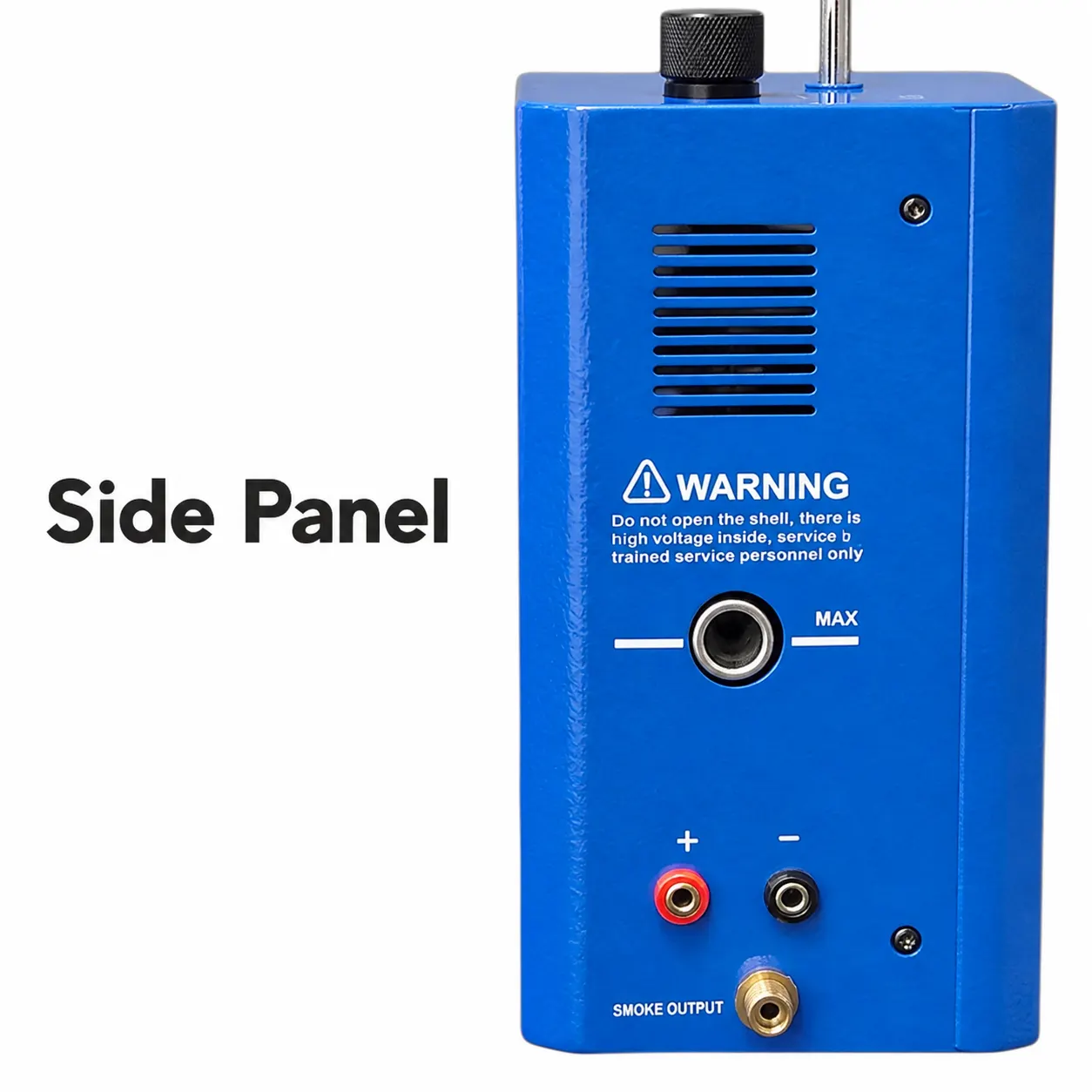
The C4 listing is specific enough to frame the purchase: automotive smoke leak detector, English Version, vehicle leak-diagnostic work, and engine intake and exhaust system checks. It also states that smoke oil is not supplied. Those are the facts a buyer can safely carry from the page into a workshop plan.
The page does not provide a vehicle compatibility table, a complete adapter list or a universal set of operating instructions. For an engine bay, those omissions matter because the correct connection point depends on the vehicle and the system being tested. Manufacturer does not specify those details on the current product page.
- Describe the symptom without naming a replacement part.
- Identify whether the next check concerns intake or exhaust.
- Read the vehicle or engine-specific service procedure.
- Confirm the connection method, smoke oil and any extra parts before booking the job.
- Record what the smoke result proves and what it still leaves open.
Apply the HSE safety lens
HSE guidance says motor vehicle repair work has particular dangers and that employers and self-employed people must identify and minimise risks. That makes the working environment part of the decision. A home mechanic needs a stable vehicle, good ventilation, lighting and a plan for hot, moving or fuel-related components.
The C4 page advises low-pressure care and vehicle-specific procedures. Treat that as a reason to follow the correct method rather than inventing a pressure setting. Never turn a missing specification into a guessed operating limit, especially around sensitive vehicle systems.
Use the result without overclaiming
A visible smoke escape can give you a better inspection target. It does not by itself prove that a repair is complete, that an engine is safe to drive or that every code has the same cause. After finding a possible leak, inspect the surrounding parts and follow the vehicle repair information.
The product is a reasonable consideration for a home mechanic or small workshop whose recurring jobs include suspected intake or exhaust leaks. It is a poor match for anyone expecting a complete professional kit, a universal connector set or a guaranteed answer to an engine warning light.
Related guides and product details
Use the C4 as a focused leak-finding aid, then let the vehicle procedure and observed evidence decide the repair. Read Smoke Tester for Cars: A Careful UK Buying Guide for related guidance. Read Car Smoke Leak Detector UK: What to Check Before Buying for related guidance. Review the documented specification on the C4 Automotive Smoke Leak Detector - English Version product page before ordering.
Sources and safety context
- Supports the product identity, automotive leak-diagnostic role, intake and exhaust scope, English labelling and smoke-oil exclusion. Current Cupeohome product page.
- Supports the workshop risk context for vehicle maintenance and repair. HSE: Health and safety in motor vehicle repair and associated industries.