
Short answer: A car smoke leak detector makes most sense when you already have a reason to suspect an intake or exhaust leak, but the escape point is not visible. The C4 Automotive Smoke Leak Detector is listed for vehicle leak-diagnostic work and names engine intake and exhaust checks as its use areas. It is the English Version configuration and does not include smoke oil. That makes the buying decision quite specific: confirm that your next diagnostic question is where air or exhaust is escaping, then check the vehicle procedure, connection method and consumables separately. The product page does not promise a vehicle-specific fit or a guaranteed repair.
Start with the diagnostic question
The useful question is not simply whether a car has a fault code. It is whether you need to find a place where air or exhaust may be escaping. Rough running, a hissing sound, a returning lean-code clue or an exhaust noise can justify a closer leak investigation, but none of those symptoms identifies one failed part on its own.
A smoke detector is therefore a visual diagnostic aid. It can help you decide where to inspect next when basic checks have not settled the matter. It is a poor first purchase when the fault is clearly electrical, fuel-related or internal to the engine and there is no sensible leak path to examine.
| Situation | Does a smoke check fit? | What remains to confirm |
|---|---|---|
| Suspected intake leak | Broadly within the listed use | Vehicle procedure and connection point |
| Suspected exhaust leak | Broadly within the listed use | Safe access and system condition |
| Unrelated electrical fault | Usually a poor match | Use the relevant diagnostic method |
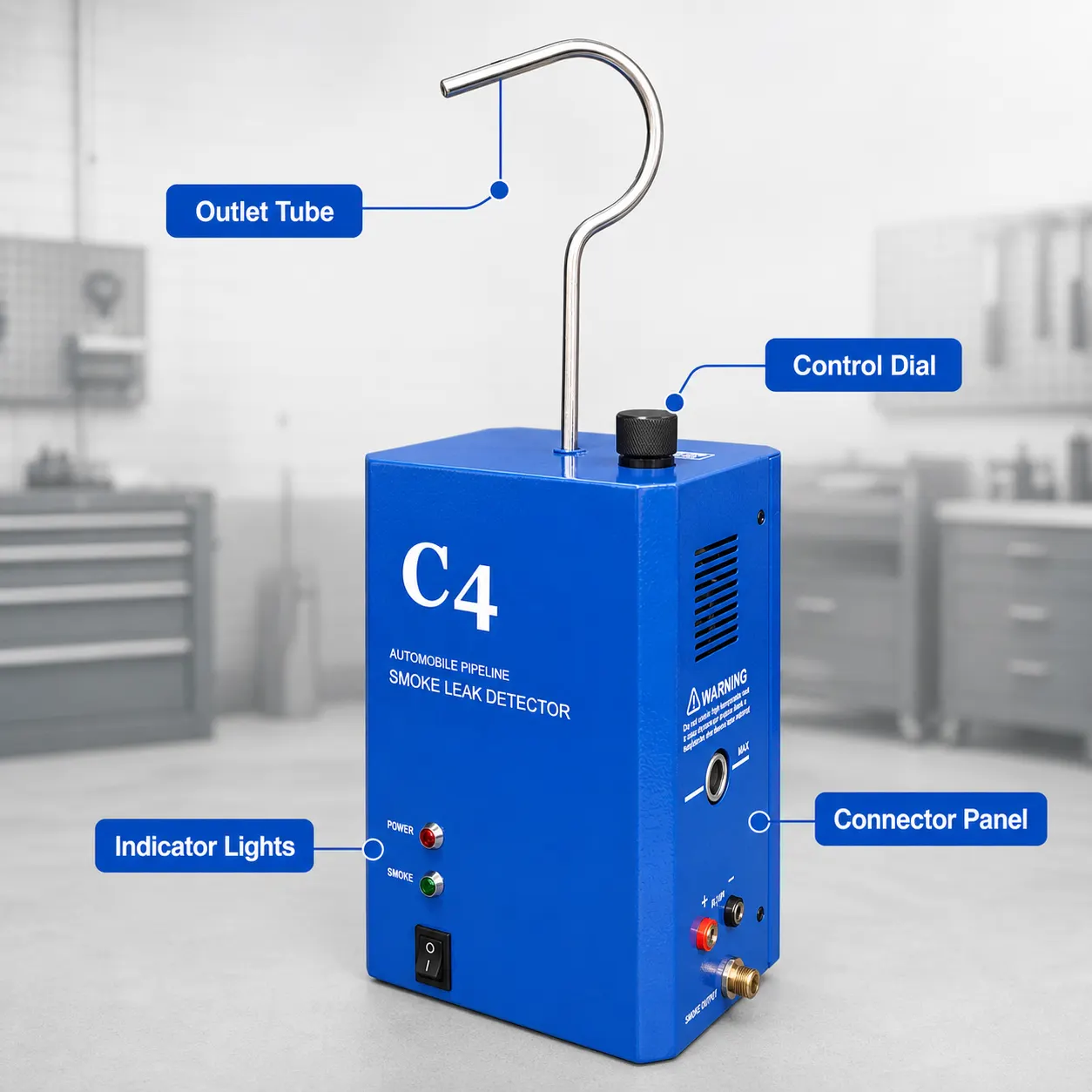
Match the C4 listing to the job
The current page identifies a C4 Automotive Smoke Leak Detector in the English Version configuration. It positions the tool for vehicle leak-diagnostic work and names engine intake and exhaust system leak checks. Those facts support a narrow automotive buying case; they do not create a universal list of cars, engines or connection kits.
The consumable boundary is explicit. Smoke oil is not included. Before setting aside a Saturday on the driveway, check what smoke medium your procedure permits and whether you need caps, plugs, hoses or adapters for the vehicle in front of you. The product page does not list those items as supplied.
- Write down the symptom and the suspected system.
- Confirm that an intake or exhaust leak is the next question you need to answer.
- Read the vehicle-specific procedure before choosing a connection point.
- Plan for smoke oil and any caps or adapters that are not documented in the product listing.
- Stop and get competent help if the vehicle condition or procedure is unclear.
Keep workshop safety separate from product claims
HSE guidance treats motor vehicle repair as work with particular health and safety risks. A smoke detector does not remove the need to control hot parts, fuel hazards, moving components, lifting risks or poor ventilation. Work on a cool, stable vehicle and follow the repair information for the exact model.
The product page advises low-pressure care and vehicle-specific procedures. That is a useful boundary, not a performance figure. Manufacturer does not specify a universal pressure rating, adapter set, certification, vehicle coverage or guaranteed fault-finding result on the current listing.
Decide before ordering
This product fits the documented category when your job is to make a suspected automotive intake or exhaust leak easier to see. It may help a home mechanic avoid replacing a sensor or hose on a guess, or help a small workshop explain why one area deserves inspection.
It is not a complete diagnosis in a box. If the symptom has no plausible leak path, if you need a fully specified professional smoke machine, or if the missing smoke oil and unknown accessories would delay the job, pause before ordering. Use the product page as the specification checkpoint and keep the decision tied to the actual vehicle.
Related guides and product details
Choose the C4 detector only when an intake or exhaust leak check is the next sensible diagnostic step, and budget separately for the missing smoke oil and any vehicle-specific connection parts. Read Engine Smoke Leak Tester: When It Helps Before More Parts for related guidance. Read Smoke Tester for Cars: A Careful UK Buying Guide for related guidance. Review the documented specification on the C4 Automotive Smoke Leak Detector - English Version product page before ordering.
Sources and safety context
- Supports the C4 product identity, English configuration, automotive use, intake and exhaust scope and smoke-oil exclusion. Current Cupeohome product page.
- Supports the need to identify and minimise health and safety risks in motor vehicle repair. HSE: Introduction to safe motor vehicle repair.